The 2026 release of the Occupation Shortage List by Jobs and Skills Australia shows an ongoing easing of occupation shortages since the peak in 2023, with the proportion of occupations assessed as being in shortage falling to 27%, the lowest level since the series commenced in 2022.
In 2026, 28 occupations entered shortage compared with the previous year, particularly across health, science, technician and trade, and machinery operator and driver occupations. A further 42 occupations moved out of shortage.
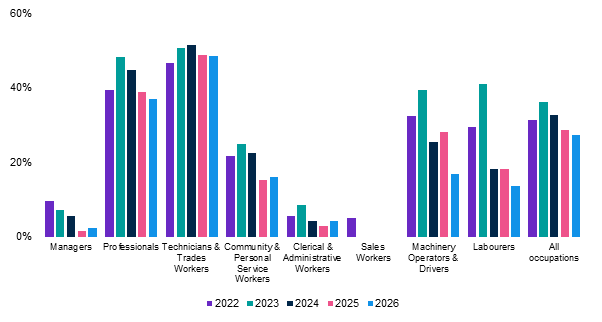
Of the 279 occupations in shortage in 2026, 251 were also assessed as being in shortage in 2025. Shortages are particularly persistent among Professionals and Technicians and Trades Workers. JSA also notes that 127 occupations have been in shortage continuously since 2021, with around 90% of these occupations classified as Professionals or Technicians and Trades Workers.
Percentage of occupations in shortage, by major group, 2022 to 2026 OSLs
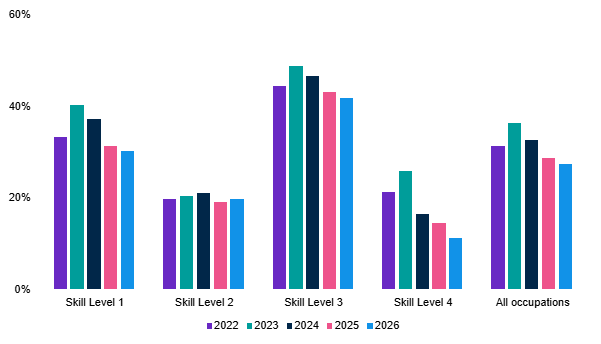
Shortages across skill levels 1 (Bachelor degree or higher) and 3 (Certificate III or IV) continue to dominate, although shortages have eased across all skill levels over time. Shortages at skill level 4 (Certificate II or III) have fallen to 11% in 2026, representing the largest decline over the period. Occupations at skill levels 2 (Associate Degree, Advanced Diploma or Diploma) and 3 account for around 60% of occupations in shortage, highlighting the important role of vocational education and training pathways in addressing workforce needs.
Percentage of occupations in shortage, by skill level, 2022 to 2026 OSLs
The findings reinforce a number of priorities that the Centre has consistently advocated for through its research and policy work. In particular, the persistence of shortages among Technicians and Trades Workers supports CET's longstanding advocacy for stronger apprenticeship and traineeship pathways, including reforms to reduce cost and complexity for employers through well-targeted incentives and streamlined administration, while improving completion rates and strengthening the skilled workforce pipeline needed by industry.
For more on occupations in your industry sector, you can read the full report here and you can search the full list of occupations here.