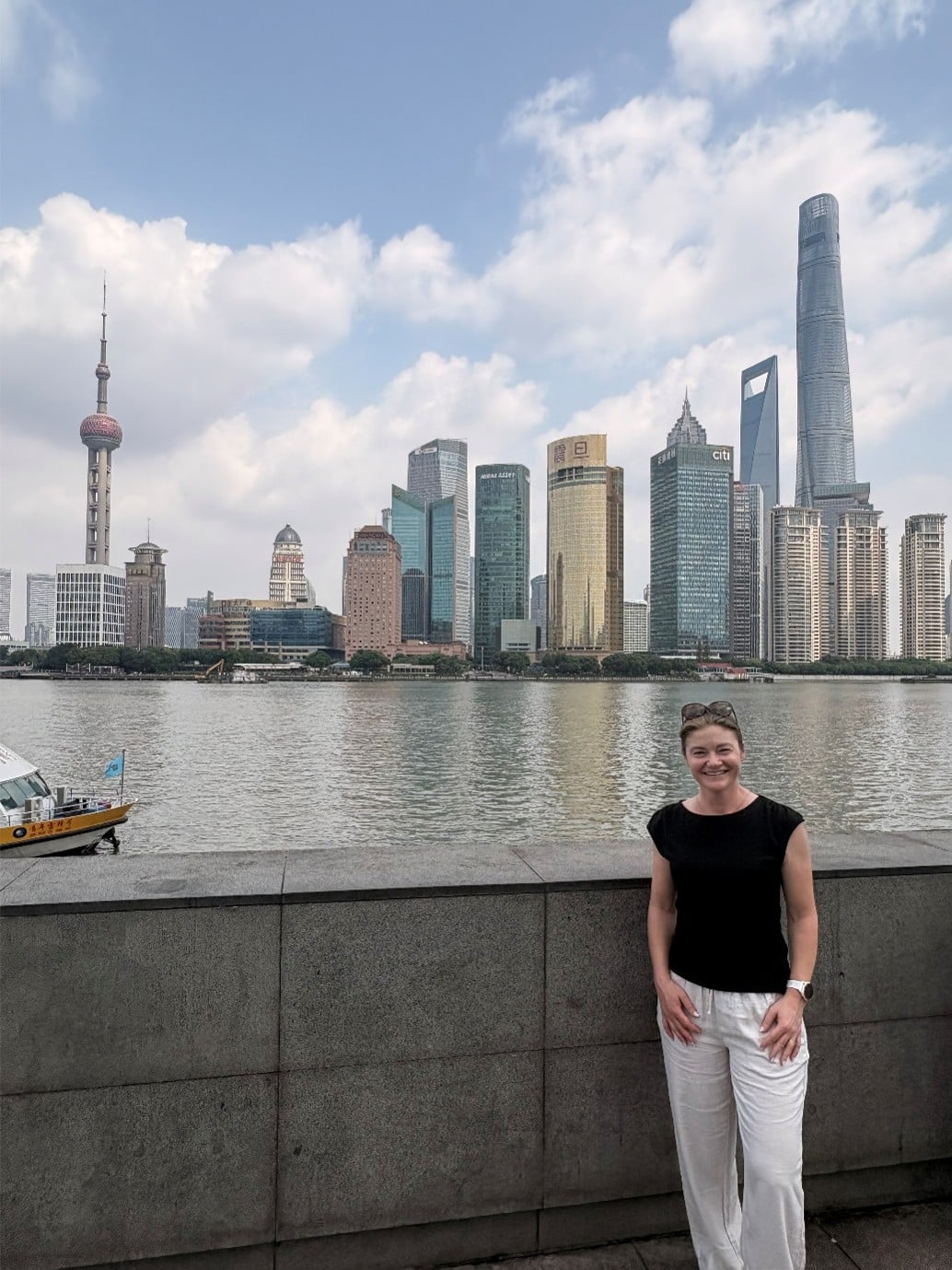
Recently, I had the privilege of travelling to China as part of an Australian delegation that included South Australia's Minister Education, Training and Skills, Lucy Hood MP, alongside representatives from the South Australian Skills Commissions and Skillaroos participants and experts from across Australia. The visit centred around the 48th WorldSkills International Competition in Shanghai, a remarkable showcase of vocational excellence and a powerful reminder of the role skills play in economic growth, social mobility and national prosperity.
The scale of WorldSkills is difficult to comprehend until you see it firsthand. Competitors from around the world demonstrated expertise across a vast range of occupations, from advanced manufacturing and robotics to construction, digital technologies, engineering and service industries. The Australian team performed exceptionally well, winning 1 Silver medal, 1 Bronze medal, and 11 Medals for Excellence, reinforcing Australia's reputation as a country with a high-quality vocational education and training system and a workforce capable of competing on the global stage.
What struck me most was that WorldSkills is much more than an international competition. It is underpinned by 64 international skills standards, providing a common benchmark against which nations can measure technical capability. These standards can be mapped against Australia's own national training standards, creating an important piece of "connecting tissue" between countries. In many ways, they form a shared language for skills development, allowing governments, educators and industries to learn from one another while maintaining their own unique systems.
Throughout the visit, there was considerable interest in Australia's VET system. International delegates consistently viewed Australia as being at the forefront of vocational education and training, particularly in areas such as industry engagement, competency-based training and qualification frameworks. While no system is perfect, Australia's experience offers valuable lessons for countries seeking to strengthen pathways between education, training and employment.
Interestingly, Australia and China face a number of similar challenges. Both countries have experienced significant expansion of university education over recent decades. While this has increased participation in higher education, it has also left the vocational sector competing for attention, investment and status. The challenge for both countries is finding the right balance so that vocational education is seen not as a second choice, but as an equally valuable pathway that delivers economic opportunity and social mobility.
Despite our different cultures and systems, one theme emerged repeatedly during discussions with Chinese educators and policymakers: the fundamental principles of education are universal. Whether in Adelaide or Shanghai, effective education seeks to build capability, create opportunity and help individuals reach their potential. The tools and structures may vary, but the core purpose remains remarkably similar.
The Chinese Government's commitment to skills development is impossible to ignore. In his opening address, China's Premier Li Qiang highlighted that more than 100 million people have been lifted out of poverty, with education and skills training playing a central role in that achievement. He spoke of a system comprising approximately 10,000 vocational schools and colleges, supported by around 30,000 vocational training and apprenticeship programs across the country.
Particularly noteworthy was the emphasis on lifelong learning. China is investing heavily in a vocational education and training ecosystem that supports workers throughout their careers, rather than simply at the point of entry into the workforce. The focus extends from initial vocational education through to mid-career upskilling and reskilling, recognising that rapid technological change is shortening the shelf life of many skills.
WorldSkills demonstrated that vocational education is far more than a workforce policy. It is a platform for international collaboration, economic development and social progress. For Australia's education and training sector, there is much to be gained from continuing these conversations and learning from international experiences.
Article written by Estha van der Linden (pictured), Head – South Australia at Australian Industry Group